Quarterback projections are usually wrong for one simple reason: We spend too much time talking about the quarterback and not enough time talking about everything around him.
Every spring, evaluators obsess over arm strength, athleticism, release mechanics and highlight-reel throws. Then September arrives, and we’re reminded that rookie quarterbacks don’t enter the NFL in a vacuum. They enter ecosystems. Some inherit stable organizations, proven play-callers and ascending offensive lines. Others walk into rebuilding projects where every dropback feels like an exercise in survival.
The data back that up.
To see which factors actually mattered most, I ran a model using college and rookie quarterback data from 2015-2025. The goal wasn’t to predict the future; quarterback evaluation is too messy for that. The goal was to identify the traits and circumstances that best correlate with early NFL success.
Five variables consistently emerged: collegiate starts, time to throw, pressure rate, screen-game dependency and first-down rate. Collegiate starts matter because experience matters. Time to throw and pressure rate help reveal whether a quarterback has a feel for the pocket or is creating some of his own problems. Screen rate and first-down rate help separate easy production from meaningful production.
Put them together, and you get a pretty good sense of how a quarterback is likely to respond when the picture changes after the snap and he has to solve the problem himself.
One of the clearest themes in the data was something that sounds obvious until you see it appear over and over again: Quarterbacks drafted first often inherit the hardest jobs. Quarterbacks selected near the top of the draft historically take more sacks and are asked to shoulder more responsibility than quarterbacks selected later. The reason isn’t complicated. The worst teams pick first. Draft capital buys opportunity, but it often comes attached to weaker rosters, shakier protection and coaching staffs under pressure to win immediately.
That’s important because these five quarterbacks enter the league under dramatically different circumstances.
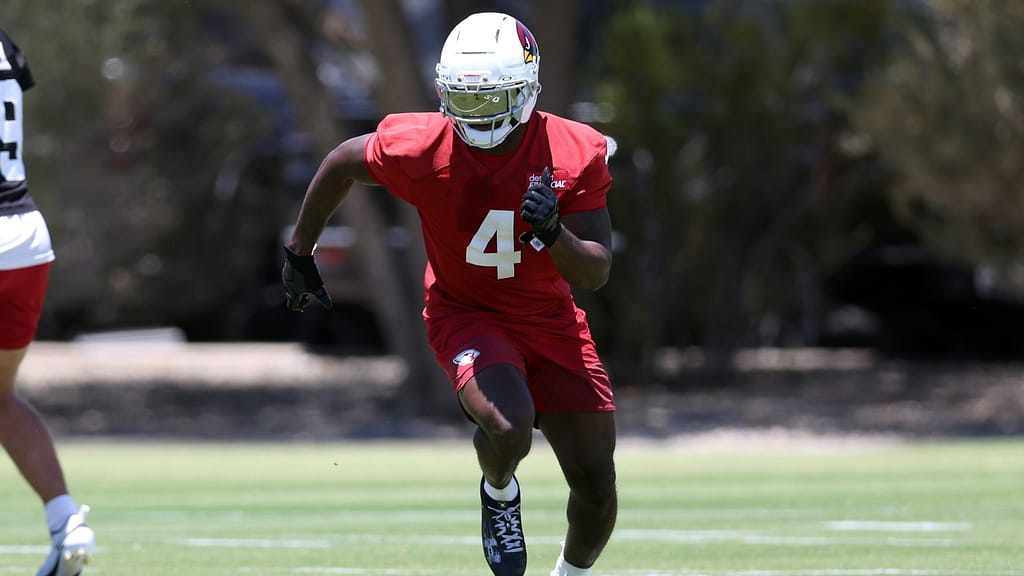
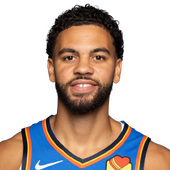
Fernando Mendoza was the No. 1 overall pick and is expected to become the face of the Raiders franchise. Carson Beck landed in Arizona, where the Cardinals invested significant resources in rebuilding the offense around him. Drew Allar joins one of the league’s most stable organizations. Cade Klubnik enters a Jets team still searching for answers. Ty Simpson walks into perhaps the ideal developmental situation behind Matthew Stafford and Sean McVay.
Their talent levels are different. Their developmental timelines are different. And their environments are very different. Which raises a simple question:
What does the best-, worst- and most likely version of each rookie season look like?
One theme kept showing up in the data. First-down rate emerged as the strongest predictor. Experience mattered. Pocket management mattered. But once these quarterbacks reached the NFL, the biggest variable often became the environment around them. Put differently, talent helps get quarterbacks drafted. Environment often determines how quickly they develop.
How reliable is this model?
Before projecting rookie numbers for the 2026 quarterback class, I wanted to know whether the model was actually identifying signal or simply fitting noise.
To test that, I removed Cam Ward, Jaxson Dart and Tyler Shough — the 2025 rookie quarterbacks who played significant snaps in their first NFL seasons — from the training data. I then reran the model to see how its estimates compared to the real-world results: the actual numbers Ward, Dart and Shough produced as rookies.
The results were encouraging.
Testing the model without the 2025 rookie QBs
| Cam Ward |
61.8% / 59.8% |
3,437 / 3,169 |
16.5 / 15 |
12 / 7 |
43 / 55 |
| Jaxson Dart |
63.2% / 63.7% |
2,667 / 2,272 |
14.5 / 15 |
9 / 5 |
34 / 35 |
| Tyler Shough |
60.9% / 61.7% |
2,914 / 2,756 |
15.2 / 14 |
11 / 12 |
39 / 42 |
The model appears to do a good job identifying realistic ranges of outcomes and the factors most likely to push a quarterback toward the high or low end of those ranges.
So let’s get to it.
Fernando Mendoza: The burden of being No. 1
If this were based solely on college performance, Fernando Mendoza would be the easy favorite — and it’s not hard to understand why. His 37.6% first-down rate ranked in the 91st percentile despite facing pressure on more than 32% of his dropbacks. Unlike many modern quarterbacks, he wasn’t propped up by a screen-heavy offense. Just 23.1% of his throws came behind the line of scrimmage.
That’s why Mendoza enters the NFL with arguably the cleanest analytical profile in the class. The problem is that he landed behind one of the weakest offensive lines in the league.
Las Vegas ranked near the bottom of the league in pass protection in 2024 and somehow got worse in 2025. Sack rate ballooned from 7.3% to 11.1%, the worst mark among the teams discussed here. Pressure rate climbed from 35.8% to 40.5%, while the running game remained one of the least efficient units in football.
That’s a problem because Mendoza wins from the pocket. He’s not going to erase protection issues with athleticism (though he’s certainly not a bad athlete). His game is built on anticipation, timing and a willingness to stand in against pressure.
Klint Kubiak’s offense can manufacture opportunities through motion and play-action. But even the best scheme eventually requires functional protection. That’s what makes Mendoza such a difficult projection. The most NFL-ready quarterback landed in the least QB-friendly environment.
And unlike Beck, Allar, Klubnik or Simpson, he probably won’t have the luxury of sitting and learning. If Mendoza is going to succeed early, he’ll likely have to do it while overcoming many of the same structural issues that have made life difficult for young passers before him.
Range of outcomes for Fernando Mendoza’s rookie season
| Completion % |
58.6% |
61.4% |
65.2% |
| Yards/Attempt |
6.0 |
6.6 |
7.6 |
| Passing yards |
2,780 |
3,360 |
3,920 |
| Passing touchdowns |
13 |
17 |
21 |
| Interceptions |
17 |
14 |
10 |
| Sacks taken |
54 |
48 |
37 |
| Passer rating |
72.4 |
82.1 |
91.8 |
| Rush yards |
120 |
165 |
210 |
The numbers tell the story. Mendoza may have the strongest analytical profile in the class, but his most likely outcome lands much closer to the middle of the distribution than the ceiling. That’s not a reflection of talent. It’s a reflection of where he landed. The model repeatedly penalized quarterbacks entering poor pass-protection situations, and no rookie faces a steeper challenge than Mendoza.
That said, this projection is also one of the most sensitive to environmental changes. The Raiders spent the offseason trying to address the offensive line, signing one of the top free agents available in Tyler Linderbaum and drafting Trey Zuhn III, who brings versatility across the interior. If those additions help stabilize the protection and Las Vegas moves closer to league average up front, Mendoza’s outlook changes considerably. More than any rookie quarterback, his projection may depend on whether everything around him improves as much as he does.
Fernando Mendoza watch: Predicting when Raiders will start No. 1 overall pick; QB’s Rookie of the Year odds
Garrett Podell
Carson Beck: The safest QB in the class?
Carson Beck
ARI • QB • #19
2025: Led ACC in passer efficiency rating (157.0), completion percentage (72.4%) and completions (338)
View Profile
If you’re looking for the safest quarterback in this class, it just might be Carson Beck. The question is whether “safe” also means limited. The numbers explain why the model liked him so much: He started 43 games, got the ball out faster than anyone in this class and moved the chains at an elite level. His 38.6% first-down rate ranked in the 95th percentile among draft-eligible quarterbacks from 2015-2026.
He played efficient football, protected the ball and consistently kept his offense on schedule. But he also entered the NFL after playing behind one of the cleanest pockets of any quarterback in the data. Beck’s profile has always been built around avoiding pressure rather than overcoming it, and the challenge for Arizona isn’t helping him play faster — it’s determining how much of his collegiate success carries over when things aren’t quite so clean.
The biggest change since his time at Georgia is that Beck isn’t entering the NFL carrying the expectations that come with being a top-five pick. And that means Arizona can afford to be patient.
That’s important because Beck faced pressure on just 19.1% of his collegiate dropbacks, the lowest figure among these quarterbacks, and more than 32% of his throws came on screens. The problem is that Arizona’s offensive line regressed dramatically in 2025. Sack rate jumped from 5.2% in 2024 to 8.3%, while pressure rate allowed climbed from 29.4% to 39.3%.
The good news for Beck is that the Cardinals spent much of the offseason trying to fix it. They selected Jeremiyah Love third overall, drafted interior offensive lineman Chase Bisontis in Round 2 and signed veterans Isaac Seumalo, Elijah Wilkinson and Matt Pryor. Those moves directly address several of the weaknesses that surfaced during a disappointing 2025 season.
And then there’s the new coach. Mike LaFleur comes from the Shanahan-McVay tree, where quarterbacks are often given answers before the snap and asked to make quick decisions after it. That’s exactly how Beck won at Georgia.
Range of outcomes for Carson Beck’s rookie season
| Completion % |
59.2% |
63.7% |
66.8% |
| Yards/attempt |
6.2 |
6.9 |
7.5 |
| Passing yards |
2,980 |
3,520 |
4,050 |
| Passing touchdowns |
12 |
18 |
23 |
| Interceptions |
15 |
12 |
9 |
| Sacks taken |
46 |
39 |
31 |
| Passer rating |
74.8 |
85.8 |
95.2 |
| Rush yards |
85 |
120 |
165 |
Beck’s projection looks exactly like what you’d expect from arguably the safest quarterback in the class. The model consistently rewarded his experience, quick processing and ability to stay on schedule. Even if the ceiling isn’t what it is for Mendoza – or even Allar (more on that in a second), Beck may have the highest floor.